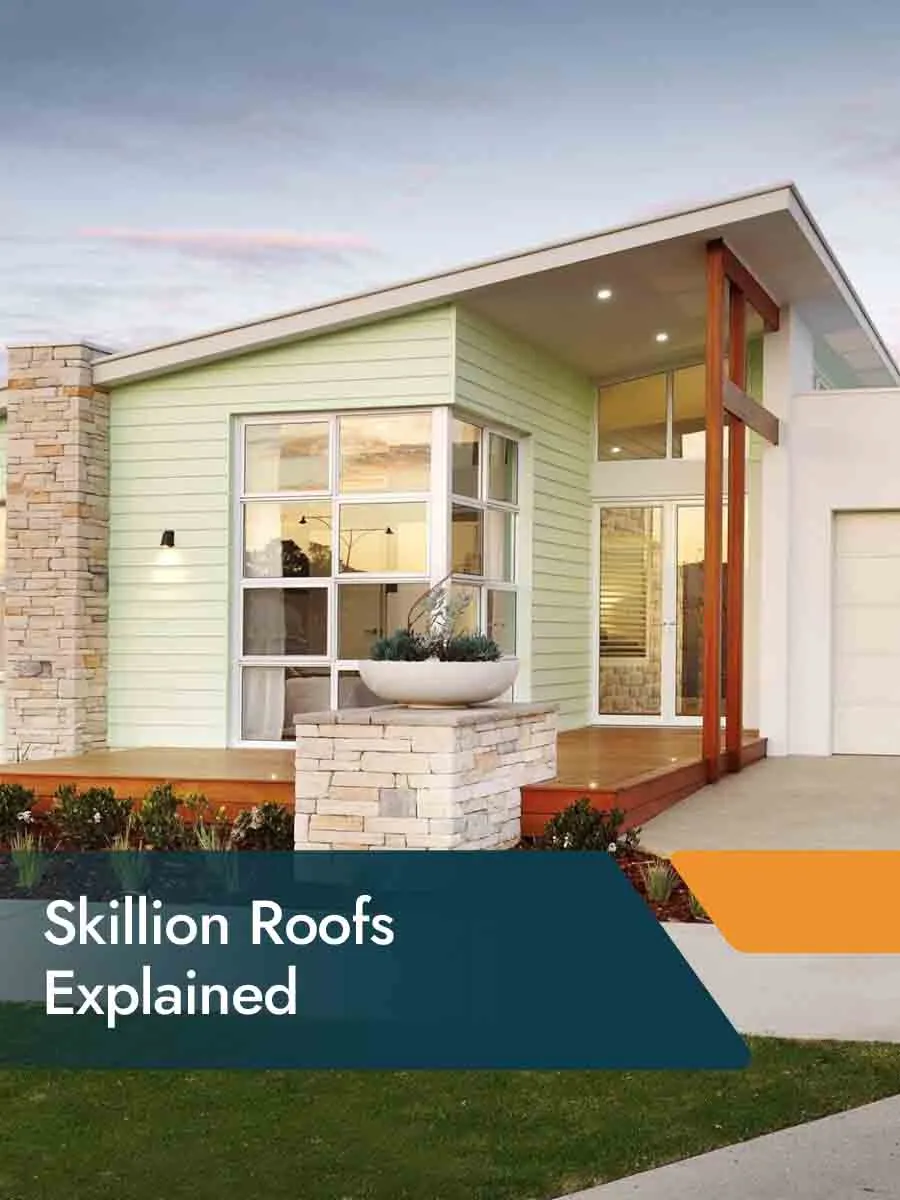
A skillion roof is one of the most recognisable roof styles in modern Australian homes. It is a single flat plane that slopes in one direction. If you are building new, adding an extension, or just trying to understand what type of roof you have, this guide covers everything you need to know.
What Is a Skillion Roof?
A skillion roof is a single-pitched roof with one sloped surface. It has no ridge in the middle. One side sits higher than the other. Rain and water run off in one direction only.
It is sometimes called a shed roof or mono-pitch roof. The design is clean and simple. That is exactly why builders and homeowners keep choosing it.
You will see skillion roofs on new builds, garages, granny flats, and home extensions across Australia. They suit both modern and industrial design styles.
Skillion Roof vs Flat, Gable, and Hip Roofs
Understanding how a skillion roof compares to other roof types helps you make a better decision.
- Skillion vs flat roof: A flat roof has little to no pitch. Water can pool on it if drainage is poor. A skillion roof has a clear slope, so water drains faster and more reliably. Maintenance is generally easier on a skillion.
- Skillion vs gable roof: A gable roof has two slopes meeting at a central ridge. It creates attic space underneath. A skillion has one slope and less internal ceiling height on the lower side. Gable roofs are more traditional. Skillion roofs look more contemporary.
- Skillion vs hip roof: A hip roof slopes on all four sides. It handles wind well and suits many Australian climates. It is more complex and costly to build. A skillion roof is simpler to construct and often cheaper.
Each roof type suits different homes, budgets, and environments. Your choice depends on your block, your council requirements, and your design goals.
Common Uses for Skillion Roofs in Australian Homes
Skillion roofs are popular across Australia for many reasons. They are practical, and they look great on modern homes.
Common applications include:
- New home builds. Many builders use skillion roofs on contemporary homes. The clean line fits well with open-plan living and large windows.
- Home extensions. A skillion roof extension is one of the most common renovation projects in Australia. It works well as an addition to an existing hip or gable roof structure.
- Garages and carports. The simple slope is easy to build and keeps costs down.
- Granny flats and studios. A skillion roof gives these smaller structures a clean, modern look without overcomplicating the build.
- Outdoor entertaining areas. Skillion roofs are common over alfresco areas and patios. They direct water away from the house and provide solid shelter.
Pros and Cons of a Skillion Roof
Before you commit to a skillion roof, weigh up the real benefits and the genuine drawbacks.
Pros:
Simple construction means lower labour costs in most cases. The single slope is fast to build and easy to understand structurally.
Excellent water drainage. The slope pushes water off quickly. You are far less likely to deal with pooling or water ingress compared to a flat roof.
Modern aesthetic. Skillion roofs look sharp on contemporary builds. They suit homes with large windows and simple lines.
Flexible design. You can use a skillion roof as a feature or blend it into a larger roof structure. It works on extensions without clashing with the main roofline.
Cons:
Limited ceiling height on the low side. Rooms under the low end of a skillion roof can feel cramped. This matters in bedrooms and living spaces.
Less attic or storage space. Unlike a gable roof, a skillion gives you little room above the ceiling for storage or insulation depth.
Wind exposure. In areas with strong prevailing winds, a large single slope can catch wind and put stress on the structure. Engineer input is important in these locations.
Condensation risk. Poor insulation or ventilation under a skillion roof can lead to moisture buildup. This needs to be managed during design and installation.
Skillion Roof Pitch and Materials
Recommended Minimum Pitch
Skillion roof pitch refers to the angle of the slope. The steeper the pitch, the faster water drains.
For metal and Colorbond roofing, the minimum recommended pitch is typically 1 degree, but 5 degrees is more commonly specified for reliable drainage. For tiled skillion roofs, you generally need a minimum of 15 degrees.
Always check your local council requirements. Some areas have specific rules around roof pitch, particularly for extensions and new builds.
A steeper pitch also gives the roof a more dramatic visual effect. Many architects use a high-pitched skillion as a design feature.
Colorbond and Metal Roofing Options
Metal roofing is the most popular choice for skillion roofs in Australia. Colorbond steel is durable, lightweight, and available in a wide range of colours.
It handles Australian conditions well. It resists heat, bushfire ember attack, and heavy rain. It is also low maintenance compared to tiles.
Other metal options include zinc and aluminium. These are used on high-end builds and offer long service lives.
Roof tiles can work on skillion designs, but they require a steeper pitch and add more weight to the structure. They are less common on true skillion roofs.
For insulation, sarking under the metal sheets helps manage condensation and heat. This is especially important on low-pitch skillion roofs where airflow is limited.
According to the Steel Construction Institute’s guide on low-pitch metal roofing, proper detailing at the eaves and ridge is critical for weatherproofing on single-slope roofs.
How to Maintain and Protect a Skillion Roof
A skillion roof is relatively easy to maintain. However, you still need to check it regularly to keep it in good condition.
Cleaning and Gutter Care
Gutters on a skillion roof typically run along one or both ends of the slope. Leaves, debris, and dirt collect quickly, especially if you have trees nearby.
Clean gutters at least twice a year. Blocked gutters cause water to back up under the roof sheets and lead to rust or rot over time.
Wash the roof surface every one to two years. A gentle low-pressure wash removes moss, lichen, and grime. Do not use high-pressure washing on metal roofs, as it can strip protective coatings.
Check flashings at the top edge and along any walls. Flashings are the metal strips that seal the roof at joints and edges. If they lift or crack, water gets in.
Inspect roof screws and fasteners. On metal skillion roofs, the screws have rubber washers that can degrade over time. Replace any that show signs of rust or wear.
When to Repaint or Recoat
Metal roofs do not last forever without maintenance. The protective coating on Colorbond and other metal roofs breaks down over time due to UV exposure, heat, and rain.
Signs that your skillion roof needs repainting or recoating:
The colour looks faded or chalky. This means the outer layer of the coating has broken down.
You can see bare metal or rust spots. These need to be treated immediately before the corrosion spreads.
The roof feels rough to the touch rather than smooth. This is a sign that the surface coating has degraded.
Most metal roofs in Australian conditions need a fresh coat or restoration treatment every 10 to 15 years. In coastal or high-UV areas, this may be sooner.
Staying on top of this extends the life of the roof by decades. Ignoring it leads to rust, leaks, and costly structural repairs. For tips on timing your roof maintenance around the seasons, read our seasonal guide to painting a house in Dandenong in 2026.
Painting and Restoring a Skillion Roof
Painting a skillion roof is not just about looks. It protects the structure underneath.
A quality roof coating seals small cracks and gaps in the surface. It reflects heat and reduces the temperature inside your home. It also slows down the corrosion process on metal roofs.
The process involves:
Surface preparation. The roof is cleaned thoroughly. Any rust is treated with a rust converter or primer. Loose screws are tightened, and damaged fasteners are replaced.
Priming. A metal primer is applied to bare areas. This creates a base for the topcoat to bond to.
Coating. A quality roof membrane or paint system is applied. This is usually done in two coats for full protection.
Inspection. Once dry, the roof is checked for any missed spots or thin coverage.
This is not a DIY job for most homeowners. Roof surfaces are slippery, and the work involves working at height. A licensed tradesperson will also know which products suit your specific roof type and condition.
If your skillion roof is looking tired or showing signs of wear, our roof painting and restoration service covers full preparation, treatment, and coating for metal and tile roofs across Melbourne.
If you are also updating the look of your home at the same time, our exterior painting services can help you match your roof colour to the rest of the property.
FAQs About Skillion Roofs
What is the difference between a skillion roof and a flat roof?
A skillion roof has a visible slope in one direction. A flat roof is nearly level. The slope of a skillion roof drains water much more effectively.
What pitch does a skillion roof need?
For metal roofing, a minimum of 5 degrees is commonly used. Tiled skillion roofs generally need at least 15 degrees. Check your local council rules as requirements vary.
Are skillion roofs good in heavy rain?
Yes. The single slope drains water quickly and efficiently. Keep gutters clear, and the roof performs well in heavy rainfall.
How long does a skillion roof last?
A well-maintained metal skillion roof can last 40 to 70 years. The coating and fasteners need attention every 10 to 15 years.
Can I add a skillion roof to an existing home?
Yes. A skillion roof extension is a popular renovation choice in Australia. You will need council approval and a structural engineer to assess the build.
Does a skillion roof need special insulation?
Yes. Because airflow is limited under a low-pitch skillion, sarking and insulation batts are important. They manage heat and condensation effectively.
Protect Your Roof with a Professional Coating
A skillion roof is a smart, modern choice for any Australian home. It drains well, looks clean, and suits a wide range of builds. But like any roof, it needs regular care to perform at its best.
If your skillion roof is faded, flaking, or showing rust, do not wait until the damage gets worse.
Book a roof restoration assessment with our team today. We inspect, prepare, and coat metal and tile roofs across Melbourne with proven products that last.
Get a free quote on roof painting and restoration.