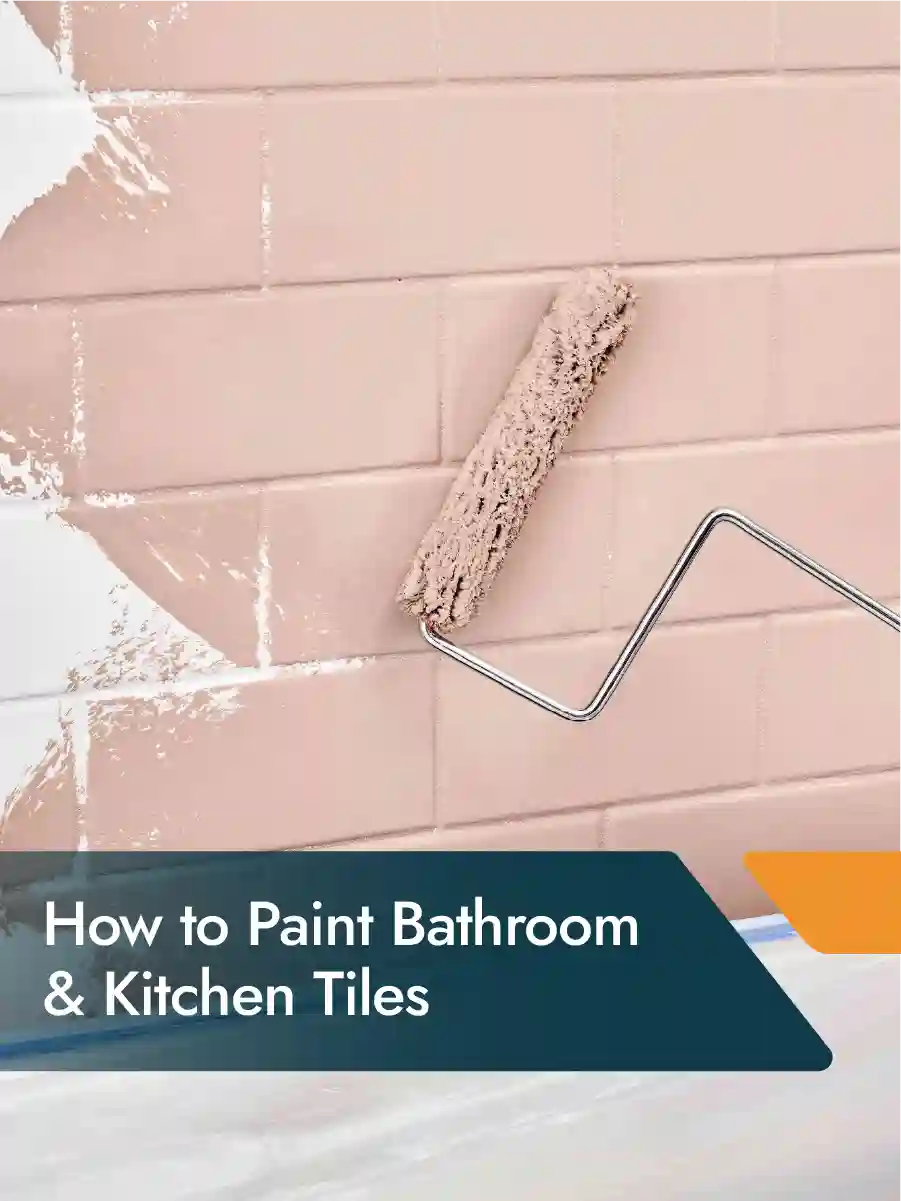
Tile paint is one of the most cost-effective ways to refresh a room without a full renovation. If your bathroom or kitchen tiles look outdated or stained, painting them can transform the space in a weekend. But it only works when done correctly. This guide covers everything you need to know before you start.
Can You Paint Over Tiles?
Yes, you can paint over tiles. It works on ceramic and porcelain tiles in bathrooms, kitchens, and even floors.
But painting tiles is not as simple as painting a wall. Tiles are smooth, non-porous surfaces. Paint does not stick to them the way it sticks to plaster or drywall. You need the right preparation and the right products.
When done properly, painted tiles look clean and fresh. When done poorly, the paint peels within months.
Which Tiles Can (and Can’t) Be Painted
Not every tile is a good candidate for painting.
Tiles you can paint:
- Ceramic wall tiles (bathrooms and kitchens)
- Porcelain tiles (walls and floors)
- Terracotta tiles with proper prep
- Quarry tiles
Tiles you should not paint:
- Heavily cracked or damaged tiles
- Tiles with loose grout throughout
- Glass tiles (paint will not bond)
- Textured non-slip floor tiles (paint fills the texture and creates a slip risk)
- Tiles in constant heavy-traffic wet areas without a specialist coating
If your tiles are cracked or the grout is failing in multiple places, painting is not a long-term fix. It is worth speaking to a professional about your options before spending money on paint.
What Paint to Use on Tiles
Standard wall paint will not work on tiles. It will peel. You need products made specifically for tile surfaces.
Tile Primers
Tile primer is the most important part of the job. It bonds to the smooth tile surface and gives the topcoat something to grip.
Without primer, even the best tile paint will fail early. Look for a bonding primer or adhesion primer labeled for use on tiles, glass, or slick surfaces.
Apply it thinly and evenly. Let it dry fully before painting. Do not rush this step.
Epoxy and Specialty Tile Paints
Once primed, you have a few paint options.
Two-part epoxy paint is the most durable choice. It is water and heat-resistant, which makes it ideal for kitchens and wet areas. It is harder to apply and has a shorter working time, but it lasts significantly longer than other options.
Tile-specific enamel paint is easier to use and works well for low-moisture areas. It gives a hard, wipeable finish but is less resistant to steam and heat than epoxy.
Chalk or matte paints are sometimes used on tiles for a decorative look, but they need a good sealer on top and are not suitable for wet areas.
For any tiled surface in a wet or high-use area, epoxy or a specialist tile coating is the right call.
How to Paint Bathroom Tiles Step by Step
Painting bathroom tiles takes time and patience. Rush any step and the whole job fails.
Cleaning and Sanding
Start with a deep clean. Bathroom tiles collect soap scum, mildew, and grease. Use a sugar soap or degreaser and scrub every tile surface, including the grout lines.
Rinse thoroughly. Let the surface dry completely. Any moisture left behind will cause adhesion problems.
Once dry, lightly sand the tile surface with fine-grit sandpaper (around 120 to 180 grit). You are not trying to scratch the tile. You are creating a slightly rough surface for the primer to grip. Wipe away all dust with a damp cloth, then let it dry again.
Priming
Apply your tile bonding primer with a short-nap roller for flat areas and a brush for grout lines and edges.
Keep the coat thin and even. Thick primer does not dry properly and can lead to a patchy finish. Let it dry for the time listed on the product label. In most cases, this is two to four hours. Some primers need a light sand between coats. Check the instructions.
Painting and Sealing
Apply your tile paint in thin coats. Two to three thin coats will always look better than one thick coat.
Let each coat dry fully before applying the next. Watch for drips and runs, especially around grout lines.
Once the final coat is dry, apply a clear topcoat or sealer made for tile surfaces. This adds protection against moisture, cleaning, and everyday wear. In a shower area, this step is not optional.
Let the whole job cure fully before exposing it to water or steam. This usually takes 48 to 72 hours minimum.
How to Paint Kitchen Tiles and Splashbacks
Kitchen tiles face heat, grease, and constant cleaning. They need a tougher approach.
Use a two-part epoxy paint or a specialist kitchen tile paint rated for high-temperature areas. Standard tile paint may yellow or peel near stovetops.
Clean with a degreaser before anything else. Kitchen tiles build up grease over time, even if they look clean. Prime with a bonding primer and apply the topcoat as described above.
For splashbacks directly behind a cooktop, check the product temperature rating. Some tile paints are not suitable for areas that get above 80 degrees Celsius.
If you want a longer-lasting result for your kitchen, it may be worth exploring a professional interior painting and refresh service instead of a DIY approach. A professional finish on tiles and cabinetry together can look far more cohesive than a patchy DIY tile job.
How to Paint Floor Tiles
Painting floor tiles is possible, but it demands more preparation and tougher products.
Floor tiles take a beating. Foot traffic, furniture, water, and cleaning chemicals all wear painted surfaces down faster than on walls.
You need a floor-rated tile paint or floor coating product. Wall tile paints are not designed for this use and will wear through quickly.
Key steps for floor tiles:
- Clean and degrease thoroughly
- Sand lightly to improve adhesion
- Apply a bonding primer
- Apply two to three coats of floor-rated tile paint or epoxy
- Seal with a heavy-duty floor topcoat
High-traffic areas like hallways and kitchens will need recoating sooner than bedrooms or low-use spaces. If you have a large floor tile area, a professional floor coating will outlast any DIY tile paint by years.
How Long Does Painted Tile Last?
Painted tiles done properly can last three to five years in low to moderate use areas. In wet or high-traffic areas, expect two to four years before you need to refresh or recoat.
Several things affect how long the finish lasts:
- Quality of preparation (the most important factor)
- Product quality
- How much moisture or heat the tiles are exposed to
- How gently you clean the surface
Harsh scrubbing, abrasive cleaners, and strong chemicals will shorten the life of any painted tile finish.
Tile-Painting Mistakes to Avoid
These are the most common reasons painted tiles fail early.
Skipping the primer. This is the biggest mistake. No primer means the paint will peel. It is not optional.
Not cleaning properly. Paint will not bond over grease, soap scum, or mildew. Clean thoroughly before anything else.
Applying thick coats. Thick coats take longer to dry, crack more easily, and look uneven. Thin coats always give a better result.
Not allowing enough drying time. Each coat needs to dry fully. Rushing leads to peeling, bubbling, and a patchy finish.
Using the wrong paint. Wall paint on floor tiles. Chalk paint in a shower. These are common mistakes that lead to early failure.
Ignoring damaged grout. Painting over cracked or failing grout will not hold. Fix the grout first, or the paint will lift along those lines.
Painting in a cold or humid room. Temperature and humidity affect how paint dries. Paint in a well-ventilated space at a moderate temperature for best results.
If you are unsure whether your tiles are suitable for painting, it is worth getting a professional opinion before buying products. You might also find our post on fixing uneven paint finishes useful if you run into surface issues during prep.
FAQs
Can you paint over already-painted tiles?
Yes, if the existing paint is in good condition. Clean, sand lightly, and apply a bonding primer before your new coats. If the old paint is peeling, remove it first.
Do I need to paint the grout as well?
The paint will cover the grout naturally as you roll or brush. You do not need to paint grout separately, but make sure it is in good condition before you start.
Can I paint tiles in a shower?
Yes, but use a waterproof epoxy paint and a waterproof sealer. Standard tile paint will not hold up to constant water and steam in a shower enclosure.
How soon can I use the bathroom after painting tiles?
Wait at least 48 to 72 hours before exposing painted tiles to water or steam. Full cure takes up to a week.
Is painting tiles worth it, or should I retile?
Painting tiles is a good short-term fix if the tiles are structurally sound and you want to refresh the look on a budget. If tiles are cracked, lifting, or you want a permanent result, retiling or a professional coating is a better investment.
Can I paint floor tiles in my bathroom?
Yes, with the right floor-rated product. Use a bonding primer, a floor-specific tile paint or epoxy, and a hard-wearing topcoat. Avoid painting non-slip textured tiles.
Thinking about refreshing your bathroom or kitchen without a full reno?
Our team at Ace Coating Services handles tile and bathroom refreshes as part of our interior painting and refresh service. If you want a clean, professional result that lasts, get in touch, and we will walk you through your options.