
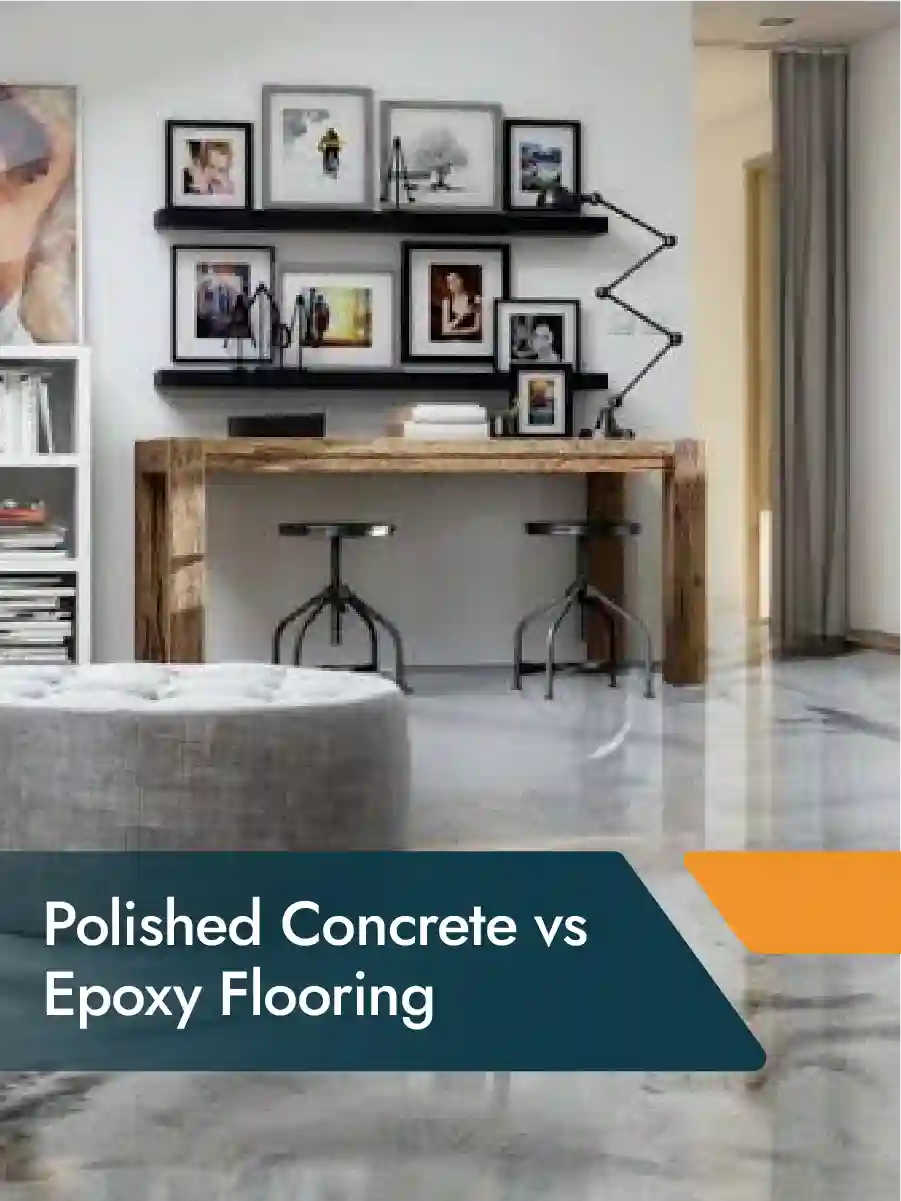
Choosing the right floor finish is not just about looks. It affects how long your floor lasts, how much work it needs, and how much you spend. Polished concrete floors are one of the most popular choices right now, but epoxy flooring is giving them serious competition. This guide breaks down both options clearly so you can make the right call for your space.
What Is Polished Concrete?
Polished concrete is an existing concrete slab that gets ground down and refined using diamond grinding tools. Each pass uses a finer grit. This builds up a smooth, reflective surface right from the concrete itself.
No coating sits on top. The finish is part of the slab. You can choose different levels of shine, from a matte look to a high gloss mirror finish.
Polished concrete is common in homes, cafes, retail shops, and warehouses. It suits spaces where a clean, industrial look fits the style.
What Is Epoxy Flooring?
Epoxy flooring is a coating system applied over a concrete base. It uses resin and hardener that bond together to form a hard, protective layer over the slab.
You can add colour, texture, flake, or metallic effects. It covers surface imperfections in the concrete and gives you more design flexibility than polished concrete.
Epoxy is used widely in garages, industrial facilities, commercial kitchens, hospitals, and showrooms. It is built to handle heavy use and chemical exposure.
Polished Concrete vs Epoxy: Key Differences
Both finishes start with concrete. Both are durable and low-maintenance. But they work differently and suit different spaces.
Durability and Lifespan
Polished concrete is extremely hard-wearing. Because the finish is the slab itself, it does not peel, chip, or delaminate. With basic care, it can last the lifetime of the building.
Epoxy is also tough, but it is a surface coating. Over time, heavy traffic, UV exposure, or sharp impacts can cause it to chip or yellow. A quality epoxy system in a well-prepared surface lasts 10 to 20 years. After that, it can be recoated.
One thing that affects both finishes equally is the quality of the concrete underneath. A weak or poorly cured slab causes problems for both systems. This is why professional surface preparation is not optional. It is the foundation that determines how well either finish performs over time.
For raw longevity with zero reapplication, polished concrete wins. For a finish that can be refreshed and updated, epoxy is the better choice.
Appearance and Finish Options
Polished concrete gives you a natural, elegant look. The aggregate in your slab shows through. The result depends on what is already in your concrete.
Epoxy gives you far more control. You choose the colour, the finish, the texture, and any decorative effects. Metallic epoxy can look like a painted ocean or a liquid metal floor.
If you want design freedom, epoxy delivers more options. If you want a refined natural finish, polished concrete is hard to beat.
Maintenance
Polished concrete needs dust mopping and occasional damp mopping. It does not need waxing or resealing regularly. Spills wipe up easily on a properly sealed surface.
Epoxy is just as easy to clean. Its seamless surface gives bacteria and dirt nowhere to hide. This makes it popular in food preparation areas and medical facilities.
Both finishes are low-maintenance. Neither needs specialist cleaning products.
Cost
Polished concrete cost depends on the condition of your slab, the level of finish, and the size of the area. In Australia, expect to pay roughly $50 to $100 per square metre for a standard polish.
Epoxy flooring costs sit in a similar range. Basic systems start around $30 to $50 per square metre. Decorative or heavy-duty systems can push past $100 per square metre.
Surface preparation drives the cost for both. A damaged or contaminated slab costs more to prepare, regardless of which finish you choose.
It is also worth factoring in long term costs, not just installation. Polished concrete rarely needs money spent on it after the initial job. Epoxy may need a recoat every 10 to 15 years depending on traffic levels. Over a 20-year period, polished concrete can work out cheaper in total even if the upfront cost is similar. Always ask your contractor to give you a lifecycle cost estimate, not just a day one price.
Where Polished Concrete Works Best
Polished concrete suits spaces where the look of the slab is an asset. Open plan homes, retail environments, and hospitality spaces often use it to create a modern feel without the busy look of tiles or timber.
It also works well where you want a permanent, no fuss floor. Once it is done, it does not need replacing. You maintain it simply and it keeps performing.
Areas that suit polished concrete:
- Living areas and open plan kitchens
- Retail shops and boutiques
- Cafes and restaurants
- Office spaces
- Showrooms
It is not ideal for areas with heavy chemical spills, since acids can etch the surface over time.
Where Epoxy Flooring Works Best
Epoxy flooring handles environments that polished concrete cannot. Chemical resistance, slip resistance, and the ability to handle heavy machinery loads make it the first choice in industrial and commercial settings.
It also suits spaces where you want to cover old, stained, or marked concrete without tearing it up. Epoxy bonds tightly to the slab and hides surface problems that polished concrete would reveal.
Areas that suit epoxy flooring:
- Garages and workshops
- Warehouses and factories
- Commercial kitchens
- Medical and pharmaceutical facilities
- Showrooms and car dealerships
If your floor takes hard knocks daily, epoxy is the stronger practical choice.
Pros and Cons at a Glance
Polished Concrete
Pros:
- Long-lasting with no recoating needed
- Clean, natural aesthetic
- Low maintenance
- Environmentally friendly since no additional materials are added
- Reflects light and brightens spaces
Cons:
- Hard and cold underfoot
- Limited design flexibility
- Slab quality affects the final result
- Can be slippery when wet without added texture
Epoxy Flooring
Pros:
- Wide range of colours and finishes
- High chemical and stain resistance
- Covers surface imperfections
- Can include anti-slip additives
- Can be recoated when worn
Cons:
- Can yellow under UV light if not UV stable
- Surface coating so it can chip or peel
- Requires thorough surface preparation
- Longer cure time before use
How to Decide Between Polished Concrete and Epoxy
Ask yourself these questions before you decide.
What does the space do? If it handles chemicals, machinery, or food production, epoxy is more suitable. If it is a living area or retail space, polished concrete fits well.
What is your concrete like? If the slab is in good condition with good aggregate, polished concrete can shine. If it is damaged, stained, or old, epoxy covers the problems.
What look do you want? If you want colour, pattern, and creative finishes, epoxy wins. If you want a clean, natural industrial look, go with polished concrete.
What is your budget? Both are similar in price for standard finishes. Get quotes for your specific space before deciding.
How long do you plan to stay? For a permanent installation, polished concrete is a set and forget option. For a floor that can be updated or refreshed, epoxy gives you that flexibility.
Who will be using the space? In a busy commercial setting with forklifts, foot traffic, or spills, epoxy handles the punishment better. In a home or boutique environment, polished concrete holds up fine and looks great doing it.
Do you need the floor fast? Epoxy has a curing time of 24 to 72 hours before it can take foot traffic. Polished concrete is usually ready sooner since there is no coating that needs to cure. If timing is tight, factor this into your decision.
If you are still not sure, talking to a flooring specialist is the fastest way to get the right answer for your space. A site visit and assessment of your slab takes the guesswork out completely. You can explore our epoxy flooring installation service to see what the process looks like.
For spaces that need protection alongside a polished look, you can also look at our range of concrete floor coatings as a middle ground option.
FAQs
Is polished concrete cheaper than epoxy?
Not always. Both sit in a similar price range. The condition of your slab and the finish level you choose affect the final cost more than the product itself.
Can you polish concrete and then apply epoxy over it?
No. Polishing creates a dense surface that epoxy cannot bond to properly. You choose one or the other, not both.
Which is better for a garage?
Epoxy is the better choice for garages. It handles oil, chemicals, and heavy vehicle loads better than polished concrete.
Does polished concrete crack?
If the underlying slab cracks, the polished surface will show it. Polished concrete does not prevent cracking. It is only as stable as the slab beneath it.
Which is easier to clean?
Both are easy to clean. A mop and a neutral cleaner handle most situations for both finishes.
Can epoxy flooring be applied over polished concrete?
Generally no. The dense, sealed surface of polished concrete prevents proper adhesion. The existing finish usually needs to be removed first.
Is polished concrete slippery?
It can be, especially when wet. Anti-slip aggregate can be added during the polishing process to reduce this risk in wet areas.
Not sure which floor is right for your space? Talk to the team at Ace Coating Services. We work across Melbourne and can assess your slab, walk you through your options, and give you an honest recommendation. Get advice on the right floor for you before you commit to anything.