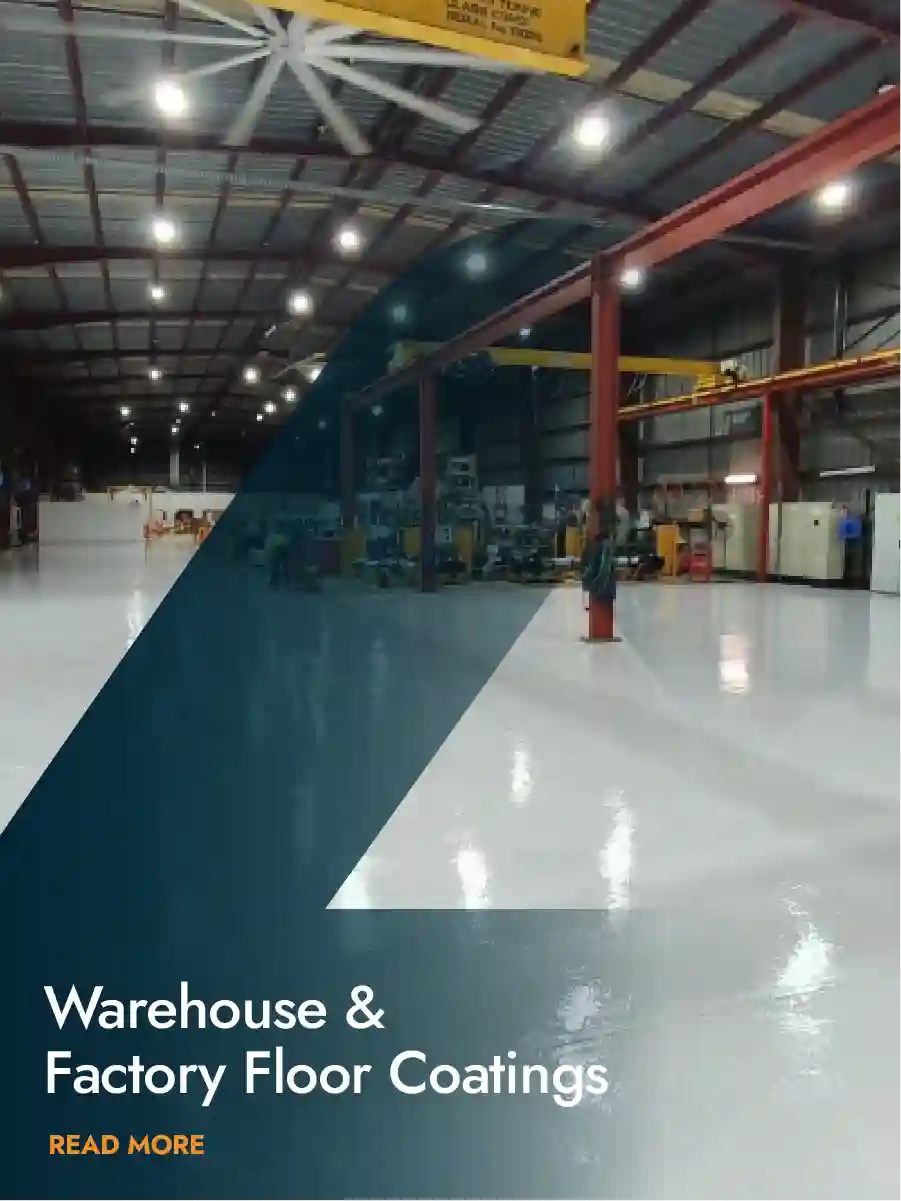
A warehouse floor coating protects bare concrete from forklifts, spills and daily wear. It also gives you a safer, cleaner surface that’s easier to maintain.
If your slab is dusting, cracking or getting slippery, a coating can often cost less than repeated patching. This guide covers the main systems, what drives the price and how to choose. We work with facilities across Dandenong and South East Melbourne, so the advice reflects local sites.
Why Warehouse and Factory Floors Need Coating
Bare concrete looks tough, but it isn’t. It’s porous, so oil and cleaning chemicals soak in. Forklift wheels also grind it into fine dust that settles on stock and machinery.
A coating seals the slab and gives you a surface you can actually clean. It helps with safety too. WorkSafe Victoria lists wet and slippery floors among the most common causes of slips, trips and falls at work.
Downtime drops because a sealed, even floor usually needs fewer patch repairs, and a seamless surface is easier to keep hygienic.
Types of Industrial Floor Coatings
Four systems cover most industrial jobs. Here’s a quick comparison before we get into the details.
| System | Best for | Watch for |
|---|---|---|
| Epoxy | General warehouses, workshops, chemical areas | Hard and rigid. Can fade under UV light |
| Polyurethane | Hot washdowns, impacts, abrasion | Costs more than basic epoxy |
| Polyaspartic | Tight shutdown windows, sunny dock doors | Needs fast, skilled application |
| Metallic epoxy | Showrooms, offices, entrances | Chosen mainly for looks |
Many sites use two layers, such as an epoxy base with a polyurethane top coat.
Metallic epoxy flooring gives a swirled, glossy finish that suits showrooms and entrances more than production areas. Our guide to the types of epoxy flooring shows each look.
Anti Slip Floor Coatings for Safety
An anti slip floor coating has grit or aggregate mixed in or scattered over the wet coat. The texture improves grip on wet, oily or busy surfaces.
You’ll see it at loading docks, ramps, wash bays and food prep zones. Anywhere water or grease reaches the floor is a candidate.
There’s a compliance side as well. Victorian employers must manage slip risks as far as reasonably practicable, and WorkSafe’s guidance lists slip resistant floor surfaces as one way to do that. Ask your installer which slip rating the system meets. Australian Standards such as AS 4586 and AS 4663 cover how surfaces get tested.
Texture needs balance, though. A rough finish grips well but is harder to clean, so we match the grit to the hazard.
Benefits of Coating an Industrial Floor
A well installed coating pays off in several ways:
- Durability: A well prepared system resists chipping and dusting under heavy loads.
- Chemical and abrasion resistance: It shields the slab from oils, acids and wheel wear, though resistance varies by product.
- Easy cleaning: Seamless surfaces wipe or scrub clean without trapping dirt.
- Line marking: Walkways and forklift lanes can be built into the system, so they tend to outlast paint on bare concrete.
- Forklift traffic: High build systems handle forklifts and pallet jacks if the thickness suits your loads.
What Affects the Cost of a Warehouse Floor Coating
Several factors set the price, and the slab matters more than most people expect.
- Floor area: Larger areas often cost less per square metre.
- Slab condition: Cracks, oil and moisture add repair work.
- Surface preparation: Diamond grinding is usually the biggest labour item.
- System: Basic epoxy costs less than heavy duty or decorative builds.
- Downtime: After hours or staged work can add labour cost.
As a rough guide, a standard epoxy system often sits around $35 to $70 per square metre. Heavy duty, anti-slip or decorative systems can reach $80 to $150 or more. These are indicative ranges only, and access, repairs and moisture can shift them.
Skimping on prep usually backfires, because a poorly bonded coating can peel. Our industrial painting team inspects the slab first, so your quote reflects its real condition.
How to Choose the Right System for Your Facility
Start with how the floor gets used, then match the system to it.
- Heavy forklift traffic: A high build epoxy or polyurethane with a hard wearing top coat.
- Chemical exposure: A chemical resistant system, checked against the exact products used on site.
- Food grade areas: A seamless, easy to sanitise system. If you do hot washdowns, ask about polyurethane based options.
- Sunlit loading docks: Polyaspartic or a UV stable top coat, since standard epoxy can fade.
When you’re unsure, share your loads, cleaning methods and shutdown window. Those three answers narrow the choice fast. Our epoxy flooring service page lists the systems we install.
The Installation Process and Downtime
Most jobs follow the same order:
- Site assessment: We check slab condition, moisture and traffic patterns.
- Preparation: Diamond grinding opens the concrete so the coating bonds. Cracks and joints get repaired.
- Coating: Primer, base coat and an anti slip top coat go on in layers.
- Line marking and curing: Markings go in, then the floor cures before traffic returns.
Downtime depends on the system. Many epoxy floors take foot traffic after about a day, but heavy loads often need several days. Polyaspartic cures faster.
You can often stay open. We schedule work in stages or after hours so staff and stock can keep moving.
Once the floor is down, regular care helps it last. Our guide on how to clean and maintain an epoxy floor explains the routine.
FAQs
What is the best floor coating for a warehouse?
High build epoxy, polyurethane and polyaspartic systems are the most common choices for warehouses. They handle forklifts, impacts and chemicals well. The best pick depends on your loads, exposure and downtime.
What is an anti slip floor coating?
An anti slip floor coating adds texture or aggregate to the surface to improve grip. It reduces slip hazards in wet, oily or busy industrial areas, which often helps meet workplace safety standards.
How much does a warehouse floor coating cost?
Cost depends on area, slab condition, prep, system and downtime. Many jobs fall between $35 and $150 per square metre. A site assessment gives you an accurate quote.
How long does an industrial floor coating last?
A professionally installed epoxy or polyurethane floor can last many years under heavy use, often around 5 to 10 years. Good prep and regular maintenance matter most. Harsh chemicals and repeated impacts shorten that.
How long does it take to install a warehouse floor coating, and can we stay open?
Timing depends on the area and system, and you can often keep operating. Work is usually staged or after hours. A site assessment gives you a realistic plan and curing times.
Can floor coatings include line marking and zoning?
Yes. Safety line marking, walkways and zoning can go straight into the coating system. That improves both safety and workflow in warehouses and factories.
Get a Free Site Assessment
Ready to upgrade your floor? Book a free site assessment and quote for your facility. We’ll inspect the slab, recommend a system and give you a written price. Or call us on +61 477 422 309.
Ace Coating Services PTY LTD delivers reliable decorating, painting, decorating and coating solutions across Melbourne, helping homeowners, businesses and industrial sites protect, refresh and upgrade their properties with long-lasting finishes.
About Author Ace Coating Services
Ace Coating Services PTY LTD delivers reliable decorating, painting, decorating and coating solutions across Melbourne, helping homeowners, businesses and industrial sites protect, refresh and upgrade their properties with long-lasting finishes.