A good epoxy floor can look sharp for years, yet grit, spills and the wrong cleaner can age it fast. Much of the wear we see across Dandenong and South East Melbourne comes from small habits, not heavy use. Learning how to clean epoxy floor surfaces the right way usually takes only a few minutes a week.
Epoxy floor maintenance isn’t complicated once you know what to use and what to skip. This guide covers both, plus how long your floor should last and when it needs a recoat.
Why Epoxy Floor Maintenance Matters
Epoxy is tough, but it isn’t indestructible. Fine grit acts like sandpaper under shoes and tyres, and it slowly dulls the gloss. Regular care also keeps the surface grippy and easy to wipe. A well-kept epoxy flooring system protects the concrete underneath, so a little effort now can delay a recoat later.
How to Clean Epoxy Floor Surfaces Every Day and Every Week
Daily Sweep or Dust Mop
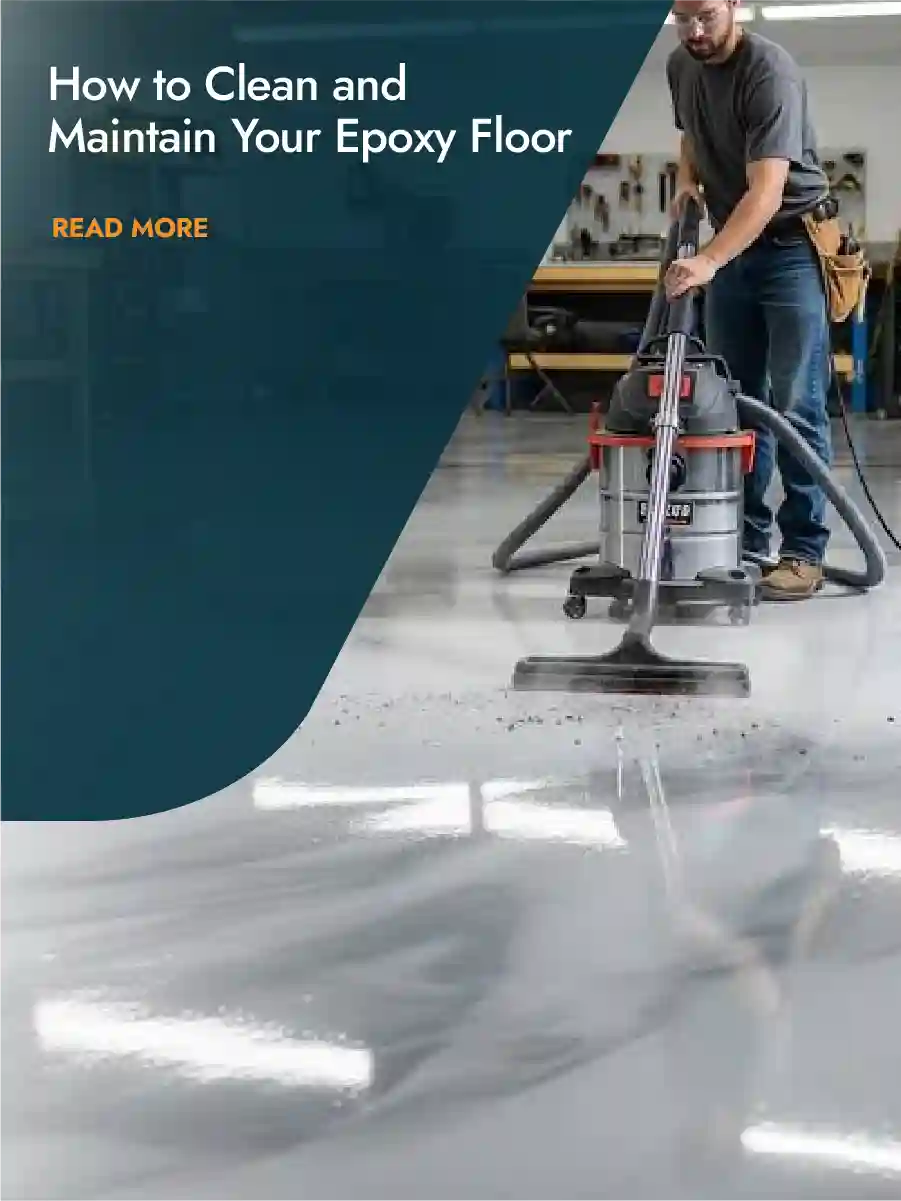
Sweep or dust mop each day, or after any messy job. This lifts grit before it scratches the coating. A soft broom does the job, and so does a vacuum with a soft brush head.
Weekly Damp Mop
Once a week, damp mop with warm water and a pH-neutral cleaner. Wring the mop well. Then rinse with clean water, because leftover residue can leave a dull film. Finally, dry the floor with a clean mop or squeegee.
Spot Cleaning Spills
Wipe spills as soon as you see them. Oil, coolant, and brake fluid can stain if they sit for days. Blot first, then wipe with a damp cloth.
The Best Cleaners for Epoxy Floors
The best cleaner for epoxy floors is usually a pH-neutral floor cleaner in warm water. Follow the label’s dilution, since a stronger mix won’t clean better and may leave a film. A little mild dish soap often works too, but rinse it off well. Some suppliers warn that soap can cloud the finish over time.
| Cleaner | Suitable? | Why |
| pH-neutral floor cleaner | Yes | Cleans well and rinses clean |
| Mild dish soap | Usually | Use a little and rinse well |
| Vinegar or citrus cleaner | No | Acidic, can dull or etch the surface |
| Bleach or ammonia mix | No | Harsh on the coating |
| Steel wool or hard scourers | No | Scratches the surface |
What to Avoid on an Epoxy Floor
A few habits cause most of the damage:
- Acids, bleach, and strong solvents, which can soften or dull the coating.
- Abrasive pads, especially dark ones, and metal scourers.
- Hot tyres straight off the road. They can cause pickup, where the coating lifts.
- Dragging heavy or sharp items. Lift them, or use a trolley.
Removing Common Stains (Oil, Rust and Chemicals)
Start with the gentlest method, then step up only if you need to.
- Soak up fresh oil with a cloth, and lift it away instead of smearing it.
- Scrub the spot with warm water, pH-neutral cleaner, and a soft brush.
- Rinse well and dry.
Rust marks often come from metal tools or cans left on the floor. The same method usually works. If a mark stays, skip the harsh solvents and ask a professional. Wipe battery acid and brake fluid quickly, too, since even short contact can mark the coating.
Maintaining Anti-Slip and Flake Finishes
Textured floors need a little more effort. Dirt settles into the texture, so a plain sweep can miss it. Scrub with a soft nylon brush and your usual cleaner, then rinse. Flake floors hide dirt well, but the clear topcoat still needs gentle care. You can learn more about flake, metallic, and glow finishes in our finishes guide.
Business owners should also think about safety. Wet or oily surfaces raise the risk of slips, and Safe Work Australia explains how to manage slip risks on workplace floors.
How Long Does an Epoxy Floor Last With Proper Care?
A professionally installed epoxy floor can last 10 years or more with proper care. Results vary, though. Heavy traffic, forklifts, chemical exposure, and weak surface preparation can all shorten that. Garages usually see lighter use than warehouses, so they often last longer. If you’re still comparing options, see how polished concrete vs epoxy flooring stacks up.
Signs Your Epoxy Floor Needs Recoating or Repair
Watch for these signs:
- Dullness that cleaning doesn’t fix
- Visible wear paths where people or vehicles travel
- Chips, cracks, or peeling
- Less grip than before
If you notice any of these, book a professional check. Catching wear early often means a recoat instead of a full replacement. It also protects the slab underneath. Our team can recoat your floor anywhere around Dandenong and South East Melbourne.
FAQs
How do you clean an epoxy floor?
Sweep or dust mop regularly, then damp mop with a pH-neutral cleaner in warm water. Wipe spills quickly and rinse well. Avoid harsh chemicals and abrasive pads, since they can dull the finish.
What is the best cleaner for an epoxy floor?
A pH-neutral floor cleaner is the safest choice. A little mild dish soap in warm water also works for many floors. Avoid acidic or citrus cleaners, bleach, and abrasive products, which can wear the coating down.
Can you use vinegar on an epoxy floor?
It’s best to avoid it. Vinegar is acidic, and regular use can dull or etch the surface. A pH-neutral cleaner is the safer option.
How do you remove oil or rust stains from an epoxy floor?
Wipe fresh spills fast, then scrub with warm water, a pH-neutral cleaner, and a soft brush. For stubborn marks, avoid harsh solvents and never use metal scourers.
How long does an epoxy floor last with proper maintenance?
A professionally installed floor can often last a decade or more. Good cleaning and timely recoating can extend that. Heavy traffic and chemical exposure tend to shorten it.
When does an epoxy floor need recoating?
Book an assessment when you see widespread dullness, wear paths, chips, or lost grip. A professional can tell you whether a recoat will protect the slab.
Book a Free Epoxy Floor Assessment
Worn floor or planning a new one? Book a free assessment with Ace Coating Services. We’ll inspect your floor, explain your options, and send a written quote. Call +61 477 422 309 to get started.
Ace Coating Services PTY LTD delivers reliable decorating, painting, decorating and coating solutions across Melbourne, helping homeowners, businesses and industrial sites protect, refresh and upgrade their properties with long-lasting finishes.
About Author Ace Coating Services
Ace Coating Services PTY LTD delivers reliable decorating, painting, decorating and coating solutions across Melbourne, helping homeowners, businesses and industrial sites protect, refresh and upgrade their properties with long-lasting finishes.