Choosing the right floor coating can feel overwhelming. There are so many systems, finishes and price points. This guide covers the main types of epoxy flooring so you can compare them side by side and make a confident decision.
Whether you are upgrading a garage in Dandenong or outfitting a warehouse in South-East Melbourne, this is your starting point.
Table of Contents
- What Is Epoxy Flooring?
- The Main Types of Epoxy Flooring
- Flake (Vinyl Chip) Epoxy Flooring
- Metallic Epoxy Flooring
- Solid Colour Epoxy Flooring
- Other Systems: Self-Levelling, Quartz and Anti-Slip
- Epoxy Flooring Colours and Finishes
- Which Type Is Right for You?
- Epoxy vs Polyaspartic
- FAQs
What Is Epoxy Flooring?
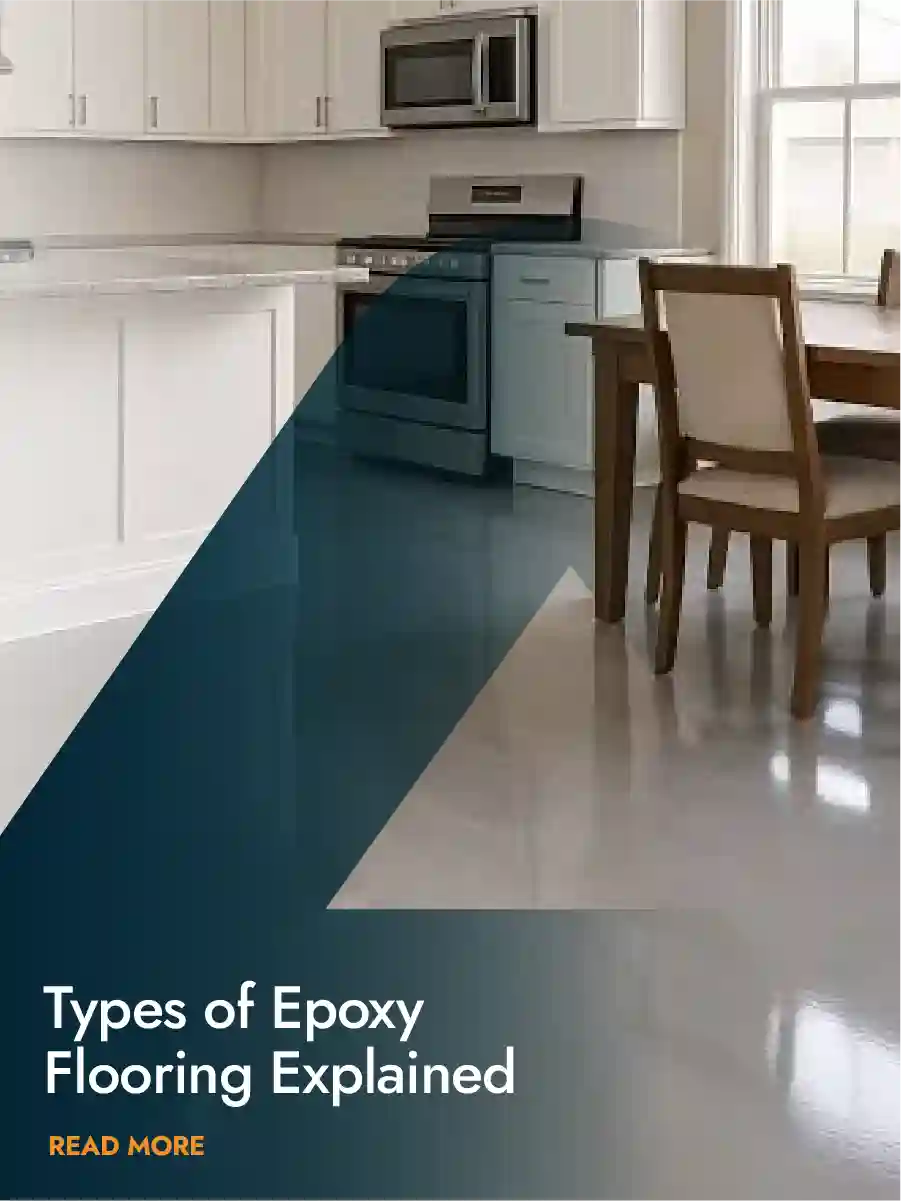
Epoxy flooring is a hard-wearing surface coating applied directly to concrete. It bonds to the substrate and creates a seamless, chemical-resistant finish. It is used in garages, showrooms, warehouses, factories and homes across Australia.
The coating goes down in layers. A primer prepares the concrete, then a base coat, then a topcoat. The system you choose determines the look, performance and cost.
The Main Types of Epoxy Flooring
Three systems cover most projects:
- Flake (vinyl chip) epoxy – decorative, textured and the most popular choice for garages and commercial spaces
- Metallic epoxy – a high-gloss, swirling finish used in showrooms and feature floors
- Solid colour epoxy – clean and industrial, built for warehouses and factories
Beyond these three, specialty systems are also worth knowing about. We cover those below.
Flake (Vinyl Chip) Epoxy Flooring
Epoxy flake flooring is the most popular system in Australia. It uses a coloured base coat scattered with decorative vinyl flakes, then sealed with a clear topcoat. The result is a textured, multi-toned finish that looks great and holds up under daily use.
Flakes come in different sizes and dozens of colour blends. Full broadcast – where flakes cover the entire floor – is the most popular and hardest-wearing option.
Pros and Cons of Flake Epoxy
| Pros | Cons |
| Hides cracks and stains | More application steps than solid colour |
| Natural grip without additives | Can cost slightly more than solid colour |
| Wide range of colour blends | Topcoat may yellow without UV-stable sealer |
| Easy to clean and maintain | Not ideal for extremely heavy industrial loads |
Best For
- Residential and commercial garages
- Retail and showroom floors
- Medical centres and office foyers
- Any space where looks and durability both matter
Flake is the smart middle ground. You get a floor that looks professional and performs well without blowing the budget.
Metallic Epoxy Flooring
Metallic epoxy flooring is a different level. Metallic pigments are mixed into the resin to create a swirling, three-dimensional effect. No two floors look the same. You can get deep charcoal, copper, bronze, pearl white and everything in between.
It is the go-to system when the floor needs to be a feature, not just a surface.
Pros and Cons of Metallic Epoxy
| Pros | Cons |
| Stunning, one-of-a-kind appearance | Higher cost for materials and labour |
| High-gloss premium finish | Needs skilled installers to get right |
| Great for brand-forward spaces | Can show scratches in heavy-traffic areas |
| Pairs well with other systems | Slippery when wet without an anti-slip additive |
Best For
- Car showrooms and luxury retail
- Restaurant entrances and hospitality venues
- Reception areas and feature floors
- Spaces where the floor is part of the brand
If you want a floor that makes people stop and look, metallic epoxy flooring is the answer.
Solid Colour Epoxy Flooring
Solid colour epoxy does exactly what it says. One clean, consistent colour across the entire floor. No flakes, no swirls – just a smooth, hard-wearing surface built to handle serious punishment.
This system is heavily used in industrial and commercial settings where function comes first.
Pros and Cons of Solid Colour Epoxy
Pros
- Most cost-effective option
- Fast to apply
- Extremely durable at high build thicknesses
- Very low maintenance
Cons
- Shows dust, tyre marks and scuffs clearly
- Less visual appeal than flake or metallic
- Can be slippery without anti-slip additives
Best For
- Warehouses and distribution centres
- Factories and heavy industrial workshops
- Commercial kitchens and food production
- Government and institutional buildings
Solid colour systems are workhorses. They are not flashy, but they get the job done in the toughest environments.
Other Systems: Self-Levelling, Quartz and Anti-Slip
A few other systems are worth knowing before you decide.
Self-Levelling Epoxy
This flows into low spots and creates a perfectly flat, seamless surface. Ideal for commercial kitchens, pharmaceutical facilities and labs where hygiene and flatness matter.
Quartz Epoxy
Quartz sand is broadcast into the coating for extreme grip and impact resistance. Widely used in wet areas, food processing plants and schools.
Anti-Slip Additives
Anti-slip agents can be mixed into almost any epoxy system. If your space gets wet regularly or sees heavy foot traffic, this is a straightforward upgrade worth adding.
Epoxy Flooring Colours and Finishes
Epoxy flooring colours are one of the most searched topics, and for good reason. The range is wide.
For flake systems, popular picks in Melbourne include grey and black granite blends, beige and sand tones, and bold blues or reds for workshops. For metallic epoxy, charcoal, silver, gold, bronze and pearl are the most popular pigments.
Solid colour systems can usually be matched to most RAL or Dulux colour codes. If you have brand colours, they can typically be replicated.
Finishes range from matte to satin to high gloss. A glossy topcoat is easier to clean but shows scuffs more than a satin finish. Your installer can advise on the right finish for your traffic levels.
Which Type of Epoxy Flooring Is Right for You?
| Space | Best System |
| Residential garage | Flake epoxy |
| Car showroom | Metallic or flake epoxy |
| Warehouse or distribution centre | Solid colour or high-build epoxy |
| Factory or heavy workshop | Industrial solid colour or quartz |
| Retail or boutique showroom | Metallic or flake epoxy |
| Commercial kitchen or wet area | Self-levelling or quartz epoxy |
A site visit makes all the difference. Our team works across Dandenong and South-East Melbourne and can assess your concrete, traffic levels and budget to recommend the right system.
Epoxy vs Polyaspartic
Epoxy is thick, durable and cost-effective. Polyaspartic cures faster, handles UV exposure better and performs well in temperature extremes. Many of the best floors combine an epoxy base coat with a polyaspartic topcoat to get the strength of both systems.
If you are weighing up your full floor coating options, our floor coating services page covers this comparison in detail.
FAQs
Which type of epoxy flooring is most durable?
High-build solid epoxy and industrial systems are toughest for heavy loads and machinery. Flake and polyaspartic hybrid systems balance durability with looks and work well in garages and showrooms.
What is flake (vinyl chip) epoxy flooring?
Flake epoxy uses a coloured base coat scattered with decorative vinyl flakes, sealed with a clear topcoat. It hides concrete imperfections, adds natural grip and is the most popular garage and commercial floor choice in Australia.
How much does flake or metallic epoxy flooring cost?
Cost depends on floor size, surface condition, prep requirements and the system chosen. Indicative rates start from around $40 to $80 per square metre for standard systems. A site measure is needed for an accurate quote.
Is epoxy flooring slippery?
It can be when wet. Anti-slip additives or a flake finish significantly improve traction and are recommended for wet areas, workshops and high foot traffic spaces.
How long does epoxy flooring last?
A professionally installed epoxy floor can last a decade or more. Traffic levels and the system chosen both affect lifespan. Proper surface preparation is the biggest factor in long-term performance.
What is the difference between epoxy and polyaspartic?
Polyaspartic cures faster, is more UV-stable and handles temperature changes better. Epoxy is thicker and more cost-effective. Many floors combine an epoxy base with a polyaspartic topcoat to get the best of both.
Ready to pick your system? Book a free measure and quote for your epoxy floor with Ace Coating Services today.