If you are budgeting a paint job for your business, the first question is always the same: how much is this going to cost? Commercial painting cost in Australia typically falls between $15 and $60 per square metre, depending on the project. That range is wide, and for good reason. Size, surface condition, access requirements and coating type all pull the number in different directions.
This guide breaks it all down so you can walk into a quote conversation knowing what to expect.
Table of Contents
- How Much Does Commercial Painting Cost?
- What Affects Commercial Painting Costs
- Cost by Project Type
- Interior vs Exterior Commercial Painting Costs
- How to Get an Accurate Quote
- How to Reduce Costs Without Cutting Quality
- Why Use a Professional Commercial Painter
- FAQs
How Much Does Commercial Painting Cost?
Broadly speaking, most commercial painting projects in Australia land somewhere in these ranges:
| Project Type | Indicative Cost per m² |
| Interior walls (standard) | $15 – $25 per m² |
| Exterior painting | $20 – $40 per m² |
| High-access or complex facades | $35 – $60+ per m² |
| Specialty coatings (epoxy, anti-corrosive) | $40 – $80+ per m² |
These are indicative only. A proper quote needs a site assessment. Too many variables affect the final number for any figure given online to be treated as a guarantee.
What Affects Commercial Painting Costs
Understanding the cost drivers helps you manage scope and budget from day one.
Size of the area
Larger jobs cost more in total but often cost less per square metre. Volume usually brings the rate down.
Surface condition
A surface that needs patching, sanding, rust treatment or mould remediation before paint goes on adds cost. The worse the substrate, the more prep is required.
Access and height
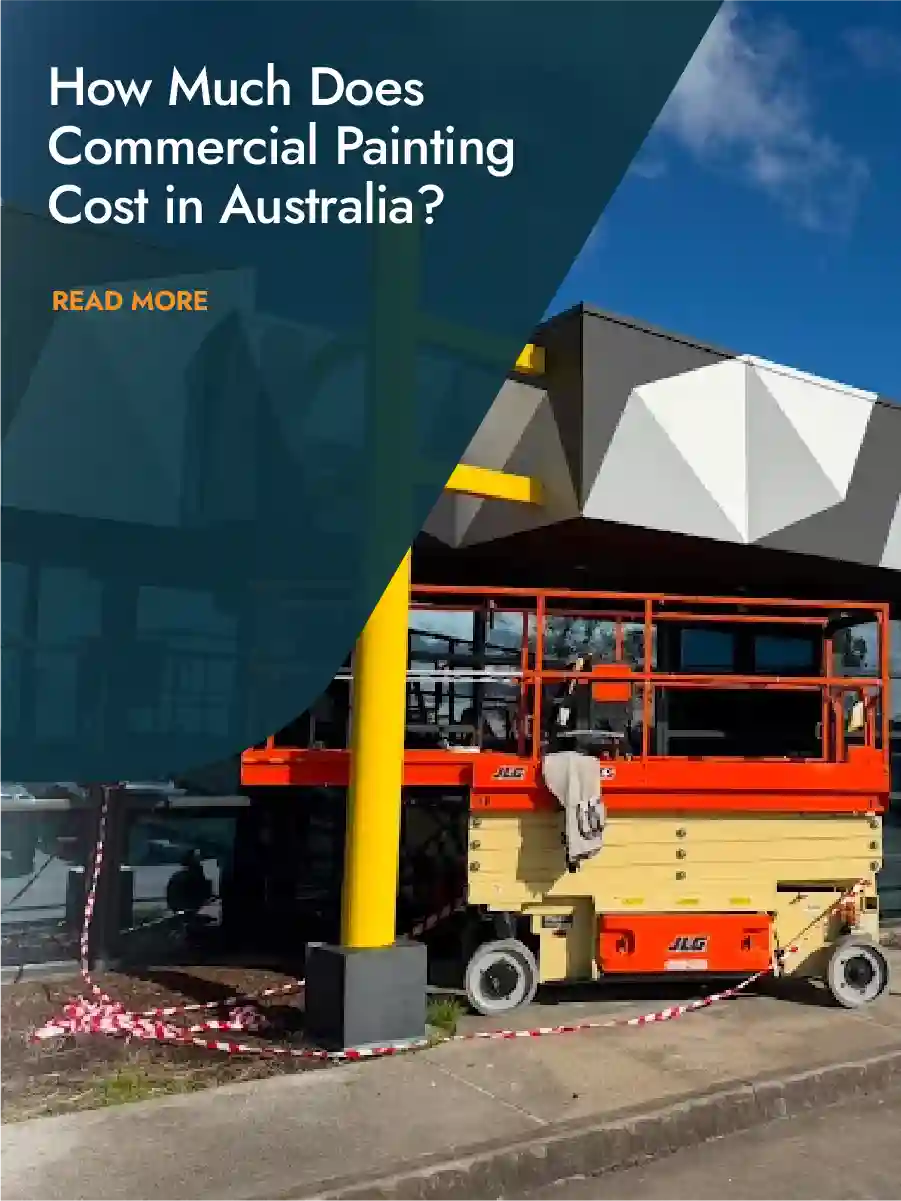
Ground-level interior work is the cheapest to complete. Multi-storey facades, roof sections and high ceilings need scaffolding, elevated work platforms or rope access. This adds time and hire costs.
Coating type
Standard wall paint is at the lower end. Anti-corrosive coatings, industrial epoxies, fire-retardant finishes and line marking systems all cost more due to material price and application requirements.
Number of coats
Most commercial jobs need two coats minimum. Darker or more saturated colours, or a surface changing from dark to light, may need three.
Working around your hours
After-hours, weekend or staged work to keep your business operational adds to labour cost. It is worth planning for this early in the process.
Cost by Project Type
Different commercial settings have different demands, and the costs reflect that.
Offices
Office interiors are typically the most straightforward. Flat walls, standard ceiling heights and minimal prep on maintained surfaces keep costs manageable. Expect most office repaint jobs to come in at the lower end of the interior range.
Retail and showrooms
Retail spaces often need careful colour matching, premium finishes and work completed overnight or on weekends to avoid disrupting trading. Feature walls, high-gloss finishes and brand-specific colour requirements add to the cost.
Warehouses and industrial facilities
Warehouses often require specialty coatings such as epoxy floor paint, anti-corrosive coatings for steel structures or line marking. Surface prep on older industrial buildings can be significant. These projects tend to sit at the upper end of the cost range.
Strata buildings
Strata painting is driven by the size of the building envelope, access requirements and the number of owners involved in the decision. A staged approach across common areas can help manage budget across strata levies.
Interior vs Exterior Commercial Painting Costs
Interior work is generally cheaper. Surfaces are protected from weather, prep requirements are typically lower and access is simpler.
Exterior painting adds cost for a few reasons:
- Surface prep is heavier due to weathering, UV exposure and moisture damage
- Access equipment is almost always required
- Materials need to handle outdoor conditions, which means higher-grade paints and primers
- Weather creates scheduling risk and can add delays
A large exterior facade can cost significantly more than the same square meterage inside. It is one of the areas where cutting corners on prep or coating quality tends to backfire quickly.
How to Get an Accurate Commercial Painting Quote
Getting an accurate quote means going beyond a phone conversation. A proper site assessment by your commercial painters will cover:
- Exact measurements of all surfaces to be coated
- Assessment of substrate condition and prep required
- Access requirements and equipment needed
- Coating specification based on the environment and use
- Scheduling options around your operating hours
- A fixed or clearly scoped quote with no hidden surprises
Be cautious of quotes given without a site visit. A number pulled from a photo or description alone is rarely accurate, and it can lead to scope creep and cost blowouts once work starts.
Our commercial painting services team in Dandenong and South-East Melbourne always starts with a thorough site assessment. It is the only way to give you a number you can actually plan around.
How to Reduce Costs Without Cutting Quality
There is a real difference between cutting costs smartly and cutting quality. Here are a few ways to bring the budget down without compromising the result.
Schedule work during slower periods
Painting scheduled during a planned shutdown, renovation or quiet trading period avoids after-hours premiums and allows faster access.
Stage the scope
If the budget is tight, consider prioritising the highest-visibility or most urgent areas first. A phased approach can spread costs across financial years.
Maintain regularly
A light touch-up program every couple of years costs far less than letting surfaces deteriorate to the point of full recoating. Preventive maintenance is the most cost-effective commercial painting strategy there is.
Get multiple quotes
Compare at least two or three quotes. Look at what is included in each, not just the bottom line. Prep, coat count and warranty terms vary significantly between painters.
Why Use a Professional Commercial Painter
Commercial painting is not the same as residential. The surfaces, coatings, access requirements and compliance expectations are in a different category entirely.
Professional commercial painters bring:
- Experience with a wide range of substrates including concrete, steel, plasterboard and masonry
- Knowledge of the right coatings for the right environments
- Proper safety systems for working at height or in live business environments
- Insurance and compliance documentation
- Workmanship warranties backed by quality coatings
For Melbourne businesses, getting the job done properly the first time saves real money. A poorly applied commercial paint job wears faster, looks worse and often needs rectification within a couple of years.
Our industrial painting and commercial painting team works across office parks, warehouses, retail strips and strata buildings throughout South-East Melbourne and Dandenong. Get a free commercial site assessment and quote today.
FAQs
How is commercial painting priced?
Commercial painting is usually priced per square metre of surface area, adjusted for surface condition, access requirements, coating type, number of coats and whether work is done outside business hours. A site assessment is needed to price accurately.
How much does it cost to paint an office or commercial building?
Interior office repaints typically start from around $15 to $25 per square metre. Exterior work and specialty coatings can range from $35 to $80 or more per square metre. A site assessment is required for an accurate, fixed quote.
What factors affect commercial painting costs?
The main factors are surface area, substrate condition, prep and repairs required, access or scaffolding needs, coating quality, number of coats and scheduling around your operating hours.
Is commercial painting cheaper after hours or during business hours?
After-hours and weekend work adds to labour cost but avoids disrupting your trade. Many businesses find that tradeoff worthwhile, especially in customer-facing or high-traffic environments.
How long does a commercial painting project take?
It depends on scope and access. A small office repaint might take two to three days. A large warehouse or multi-level facade could take several weeks. A site assessment gives you a realistic schedule built around minimising downtime.
Do commercial painters provide a warranty?
Reputable commercial painters offer a workmanship warranty and use manufacturer-backed coating systems. Always confirm insurance coverage and warranty terms before signing off on any job.
Ready to get started? Get a free commercial site assessment and quote from Ace Coating Services.