
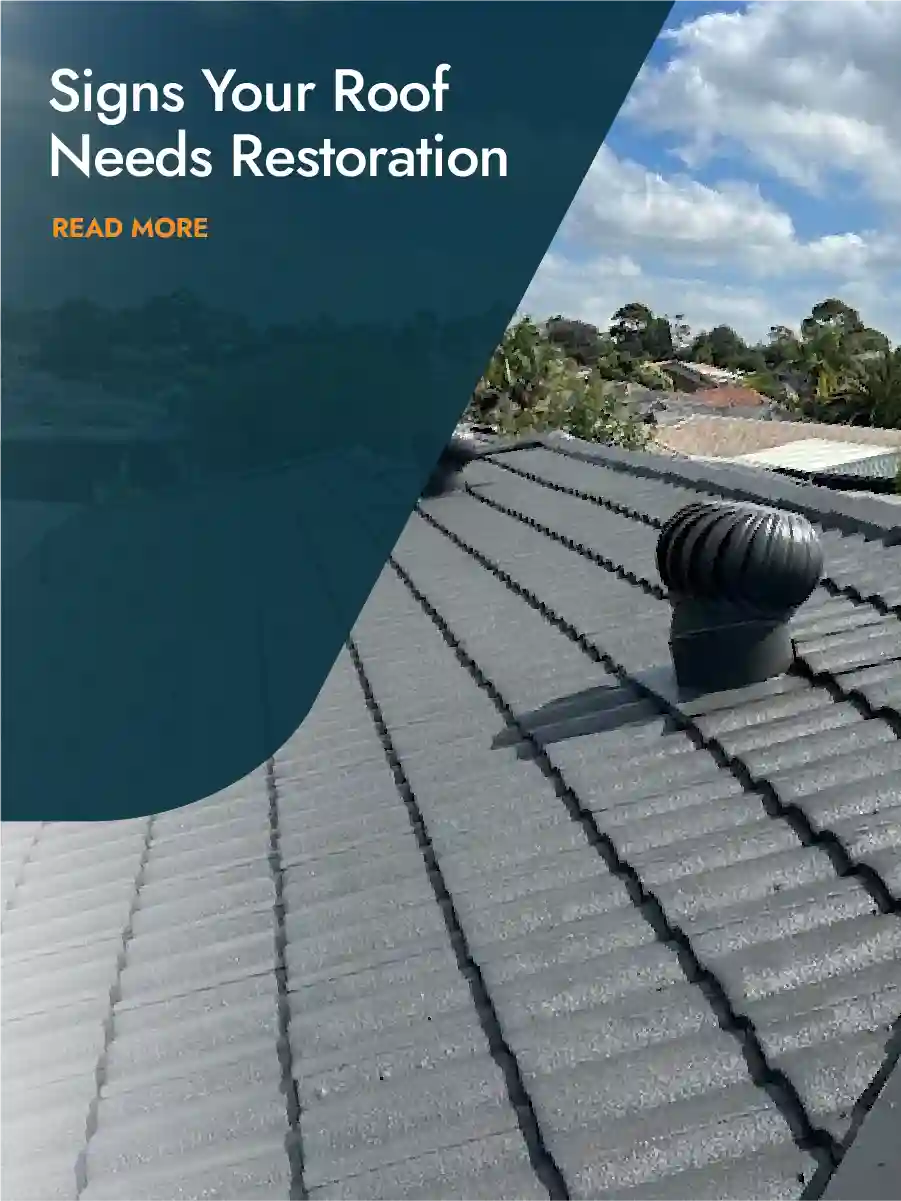
When you spotted a stain on the ceiling or a few cracked tiles, these are common signs you need roof restoration, but they don’t always mean big trouble. Plenty of roofs just need a clean, a few repairs and a fresh coat.
This guide helps you tell a minor issue from a serious one. You’ll also see how long roofs usually last and when replacement makes more sense. We work with homeowners in Dandenong and across Melbourne’s south east, so the advice suits local conditions.
Why Roof Problems Get Worse If Ignored
Small roof problems rarely stay small. A hairline crack lets in a little water each time it rains. Over months, that water soaks the timber battens, stains ceilings and can damage insulation.
Worn pointing works the same way. Once the mortar along the ridge loosens, the ridge caps can shift. Wind and rain then get underneath.
Melbourne’s weather adds to the load. Hot summers, cold snaps and heavy storms all stress a roof. So a quick fix today usually costs less than water damage repairs later.
That said, most issues aren’t emergencies. You’ve normally got time to book an inspection and plan the work.
7 Signs Your Roof Needs Restoration
Check each sign from the ground first. Don’t climb onto the roof yourself, because tiles crack under weight and falls are a real risk. Major tile makers also advise against walking on tiled roofs.
1. Cracked or Broken Tiles
Cracked or slipped tiles are the most common sign. Look for broken edges, gaps in the rows and tiles that sit crooked. Binoculars help.
One cracked tile won’t ruin a roof. Still, water finds its way under it. Several broken tiles usually point to age or storm damage and need a closer look.
2. Leaks or Ceiling Stains
Brown rings on a ceiling usually mean water is getting in somewhere. Peeling paint, damp patches and a musty smell back that up. You might also hear dripping during heavy rain.
A roof leaking, even slightly, is one of the more urgent signs. Water can travel along rafters before it shows, so the stain isn’t always under the damaged spot.
Until someone inspects it, catch drips with a bucket and take dated photos. Those photos may also help if you need to make an insurance claim.
A roofer can trace the source. With roof restoration, repairs usually come first and the coating goes on after.
3. Faded or Chalky Coating
UV rays slowly wear down roof coatings. Run your hand over a tile. If colour rubs off as chalky powder, the coating is breaking down.
Fading alone doesn’t cause a leak. However, it shows the surface has lost protection, and concrete tiles can then soak up more water. Monier says repainted concrete tiles may need a fresh coat about every five years to keep their look.
Terracotta is different. Its colour is baked in, so it doesn’t need repainting.
4. Moss, Mould or Lichen
Green patches, black streaks and crusty orange spots are all growth. They thrive where roofs stay damp, often on shaded sides.
Moss holds moisture against the surface. Over time it can lift edges and clog gutters. A professional clean usually sorts it out, and our pressure wash service covers roofs. Pressure matters, though. Too much can crack tiles, which is why Monier recommends a qualified pro for tile cleaning.
5. Rusted or Lifting Metal Sheets
On a metal roof, look for rust spots, peeling paint and sheets that seem lifted. Also ensure the standards to follow for metal roofing. Rust often starts around screws, cut edges and overlaps. Loose fasteners can let water in.
Surface rust can often be treated early. Rust that eats through a sheet is a bigger job.
6. Crumbling Bedding and Pointing
Bedding is the mortar under your ridge caps. Pointing is the layer on top that seals it. Both can crack and fall out over time. Monier notes that pointing can loosen with weather exposure.
Check the ridge line for gaps, loose caps or mortar bits in the gutters. Loose ridge caps can let rain in, and strong winds may lift them.
7. Blocked or Sagging Gutters and Valleys
Gutters carry water off the roof. When they clog or sag, water can back up under tiles or sheets. Watch for overflow marks on walls, plants growing in the gutter or a gutter that dips in the middle.
Valleys are the folds where two roof sections meet. They collect leaves, and standing water there can rust metal and wear out coatings. If you can’t reach them safely, ask a professional.
Tile vs Metal Roofs: What to Look For
Tile and metal roofs fail in different ways. Tiles tend to crack and shift. Metal tends to corrode and loosen.
| Area | Tile roofs | Metal roofs |
| Surface | Faded, chalky or porous tiles | Peeling paint, chalking, rust spots |
| Joins | Cracked pointing, slipped tiles | Loose screws, lifted sheets, failed sealant |
| Moisture | Moss and lichen | Rust at overlaps, pooling in valleys |
Low pitch roofs need extra attention. Our skillion roofs guide covers the drainage and sealing issues that come with them.
How Long Should a Roof Last?
Tile roofs can last 50 years or more, and metal roofs often last around 30 to 50 years. Those are rough figures, and real roofs vary a lot.
Metal gives us a useful reference point. Sellers offers warranties of up to 36 years on Colorbond and Zincalume roofing. That’s only when conditions are met, including being more than 5 km from salt water. A warranty isn’t a lifespan, but it hints at what the steel can handle.
The roof surface often outlasts the parts around it. Coatings, bedding and pointing wear out sooner. For that reason, many roofs need work long before the tiles or sheets give up.
Age alone doesn’t settle it either. A 30 year old tile roof in good shape might only need a clean and new pointing.
Roof Restoration vs Replacement: When to Choose Each
Restoration is usually the better choice when the roof structure is sound and the problems sit on the surface. Think cracked tiles, a faded coating, worn pointing or moss.
Replacement makes more sense when the structure is failing. Signs include:
- A sagging roof line or ceiling
- Rotten battens or timber framing
- Many broken or crumbling tiles
- Metal sheets rusted right through
- Leaks that keep returning after repairs
Replacing a roof when it’s due is the right call, and we’ll tell you if that’s where yours stands. Restoration, however, often costs much less when the roof is still sound.
Prices depend on roof size, shape and condition, so we don’t quote fixed numbers without a look. Our guide to how much roof restoration costs in Melbourne explains what moves the price.
What a Professional Roof Inspection Involves
A good inspection is low pressure. You get an honest look at the roof, clear advice and a written quote if you want one. There’s no obligation to go ahead.
During a roof inspection, we check:
- Tiles or sheets for cracks, rust and movement
- Bedding and pointing along ridges and hips
- Valleys, flashings and gutters
- Coating condition and any moss growth
- Ceilings and the roof cavity for damp, where access allows
We also photograph problem areas so you can see what we see. After that, we explain your options in plain language. Some roofs just need small repairs, and we’ll say so.
FAQs
What are the signs that a roof needs restoration?
Common signs include cracked or slipped tiles, leaks or ceiling stains, a faded or chalky coating, moss and lichen, rust on metal roofs, and crumbling bedding or pointing. Any one of these is worth a professional inspection. Together, they often mean it’s time to plan restoration.
How do I know if my roof is leaking?
Look for water stains on ceilings or walls, damp patches in the roof cavity, peeling paint or a musty smell. You may also hear dripping during rain. Even a small stain can get worse if you leave it, so get it checked.
How long does a roof last before it needs work?
Tile roofs can last 50 years or more, and metal roofs often last around 30 to 50 years. The coating, bedding and pointing usually need attention sooner. Most roofs benefit from restoration well before the roof itself fails.
Should I restore or replace my roof?
Restoration is usually the better value when the structure is sound and the issues sit on the surface, like cracked tiles, faded coating or worn pointing. Replacement is only needed when the structure itself is failing. An inspection shows which one applies.
Is roof restoration worth it?
Yes, when you do it before serious damage sets in. It can extend the roof’s life, prevent leaks and lift your home’s street appeal, usually for far less than replacement. A site inspection confirms whether now is the right time.
How often should a roof be inspected?
Every few years is a good rule for Melbourne roofs, plus after major storms. Catching small issues early costs far less than repairing water damage later.
Book a Free Roof Inspection
Not sure what you’re seeing up there? Book a free, no obligation roof inspection with Ace Coating Services. Call +61 477 422 309 or send an enquiry through our contact page.

Ace Coating Services PTY LTD delivers reliable decorating, painting, decorating and coating solutions across Melbourne, helping homeowners, businesses and industrial sites protect, refresh and upgrade their properties with long-lasting finishes.
About Author Ace Coating Services
Ace Coating Services PTY LTD delivers reliable decorating, painting, decorating and coating solutions across Melbourne, helping homeowners, businesses and industrial sites protect, refresh and upgrade their properties with long-lasting finishes.