
Roof restoration cost in Australia ranges from $2,000 to $8,000 for an average home. The final price depends on roof size, material, and how much repair work is needed. Roof painting cost alone can sit between $1,500 and $4,000 if the roof is in good shape and just needs a fresh coat.
In this guide, we break down the real costs for 2026. We also explain what gets included in a restoration job, how tile and metal roofs compare, and when restoration makes more sense than a full replacement.
How Much Does Roof Restoration Cost?
For most homes in Australia, roof restoration cost falls between $2,000 and $8,000. A small unit or townhouse may cost less. A large two storey home with a steep roof will cost more.
Here is a simple price range based on roof size:
- Small roof (under 150m²): $2,000 to $4,000
- Medium roof (150m² to 250m²): $3,500 to $6,000
- Large roof (over 250m²): $6,000 to $9,000+
These numbers cover a standard restoration. This includes cleaning, minor repairs, repointing, and two coats of paint. If your roof needs major repairs, like replacing broken tiles or fixing leaks, the cost will go up.
Roof painting cost is usually a smaller part of the total job. Painting alone, without repairs, often costs between $1,500 and $4,000 depending on roof size and paint quality.
A few things that affect your final price:
- Roof size and pitch
- Type of roof material
- Number of repairs needed
- Access to the roof (two storey homes cost more)
- Quality of paint and coating used
- Location and labour rates in your area
Always get a written quote before work starts. A good roofer will inspect the roof first and explain what work is needed and why.
Extra Costs to Keep in Mind
Some jobs need extra work that is not part of a standard quote. These extra costs can add to your final roof restoration cost.
- Whirly bird or vent replacement: $150 to $300 each
- Gutter cleaning or repair: $200 to $500
- Sarking replacement under tiles: $1,000 to $3,000
- Asbestos roof handling: adds extra cost due to safety rules
- Scaffolding for steep or high roofs: $500 to $1,500
Ask your roofer to list these separately in the quote. This helps you see exactly what you are paying for and avoid surprise costs later.
Tile vs Metal (Colorbond) Roof Restoration Cost
The type of roof you have makes a big difference to the price. Tile roofs and metal roofs need different processes and materials.
Tile Roof Restoration Cost
Tile roofs often cost more to restore than metal roofs. This is because tiles need more prep work. Cracked or broken tiles must be replaced. Ridge caps often need repointing with new mortar or flexible pointing.
A full tile roof restoration usually costs between $3,000 and $8,000. The price depends on:
- How many tiles need replacing
- How much repointing is needed
- The size of the roof
- The type of coating used (acrylic vs membrane)
Metal roof restoration is often cheaper and faster than tile roof restoration. This is because metal roofs do not have the same repointing and tile replacement costs.
A typical metal roof restoration costs between $2,500 and $6,000. The process usually includes:
- Pressure washing the roof
- Treating any rust spots
- Replacing damaged screws or flashings
- Applying a primer
- Two coats of roof paint
Colorbond Roof Restoration Cost
Colorbond roofs are a type of metal roof, but they need a slightly different approach. Colorbond roof restoration cost is usually between $3,000 and $6,500.
Colorbond roofs fade over time due to sun exposure. Restoration brings back the colour and protects the roof from rust. The process is similar to standard metal roof restoration but may need a specific primer made for Colorbond steel. This helps the new paint stick properly.
If your roof is mostly in good shape but the colour has faded, a Colorbond roof restoration can make your home look new again without the cost of a full roof replacement.
Signs Your Roof Needs Restoration
Many homeowners wait too long before getting their roof checked. Spotting the early signs can save you money. Here are common signs that your roof needs restoration soon.
Faded or Chalky Paint
If your roof colour looks dull or chalky, the protective coating has worn off. This leaves the roof exposed to weather damage.
Cracked or Broken Tiles
Cracked tiles let water seep into the roof structure. Over time, this can cause leaks and damage to ceilings and walls.
Rust Spots on Metal Roofs
Rust spots on a Colorbond or metal roof are an early warning sign. If left untreated, rust spreads and weakens the roof sheets.
Moss or Lichen Growth
Moss and lichen hold moisture against the roof surface. This speeds up wear and can lift tiles or damage coatings.
Loose or Missing Ridge Capping
Loose ridge caps allow water to enter under the tiles. This is one of the most common causes of roof leaks in older homes.
Stains on Ceilings
Brown stains on your ceiling are often a sign of a roof leak. This usually means water has already entered the roof space.
If you notice any of these signs, it is best to get a roof inspection. Catching problems early often means restoration is enough, and you can avoid a full roof replacement.
What’s Included in a Roof Restoration?
A proper roof restoration follows several steps. Skipping steps leads to poor results and a shorter lifespan for the new coating. Here is the roof restoration process most professionals follow.
Step 1: Roof Cleaning
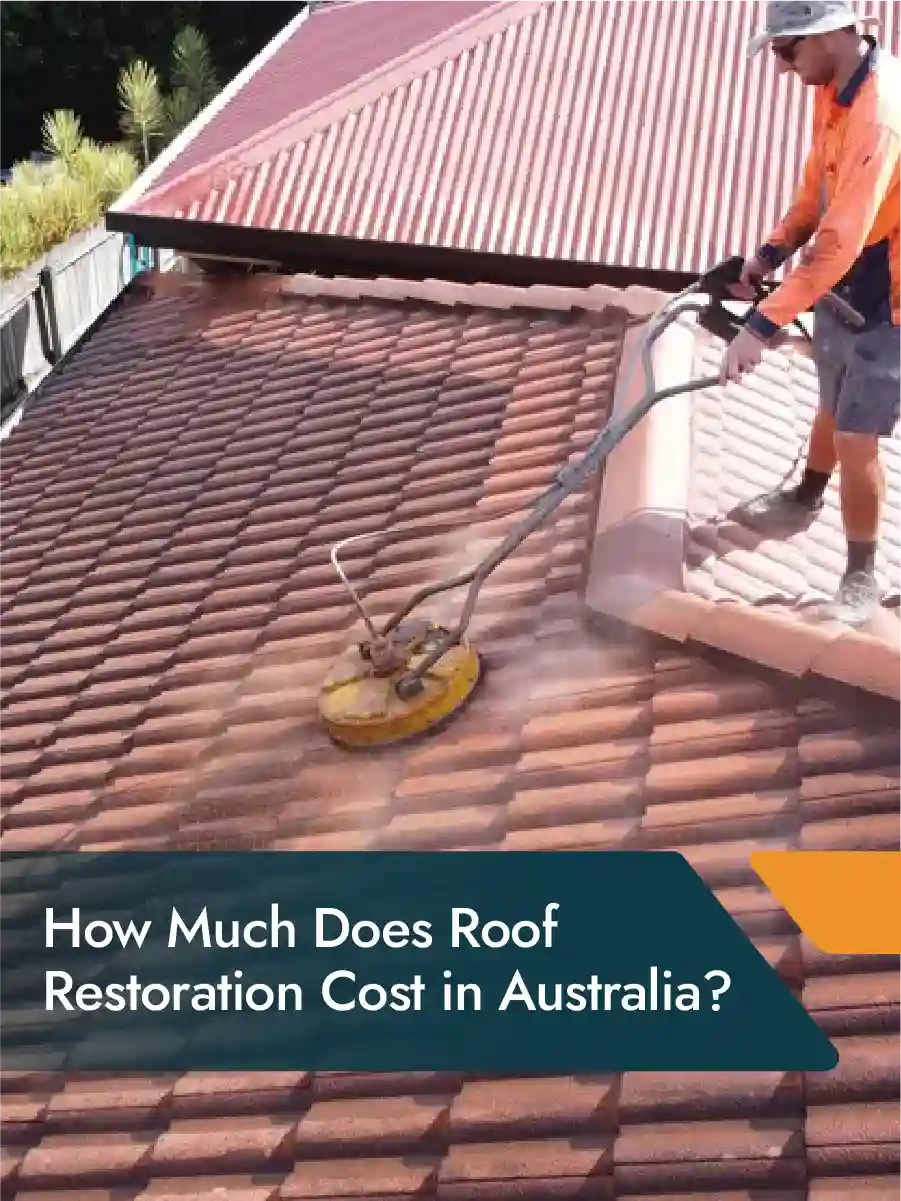
The roof is cleaned using a high pressure water blast. This removes dirt, moss, lichen, and old loose paint. Cleaning is the most important step. Paint will not stick well to a dirty roof.
Step 2: Roof Inspection and Repairs
After cleaning, the roofer checks for damage. This includes cracked tiles, rusted sheets, loose screws, and damaged flashing. Any broken parts are repaired or replaced before painting starts.
Step 3: Repointing (Tile Roofs Only)
For tile roofs, the ridge capping is repointed. Old, cracked mortar is removed and replaced with new pointing. This stops water getting under the ridge caps.
Step 4: Priming
A primer is applied to help the topcoat bond to the roof surface. This step is important for metal roofs, especially Colorbond, where the surface is smooth and slippery.
Step 5: Coating
Two coats of roof paint or membrane are applied. This is the final step in the roof restoration steps. The coating protects the roof from UV rays, rain, and temperature changes. It also gives the roof a fresh, clean look.
A full restoration using these steps can add many years to your roof’s life. If you want to know more about the materials used and how long different roof types last, this guide on roofing materials and lifespan from the Australian Government is a useful read.
Is Roof Restoration Worth It?
Many homeowners ask if roof restoration is worth it compared to replacing the roof completely. In most cases, yes, it is worth it.
Roof Restoration Benefits
Here are the main roof restoration benefits:
- Costs much less than a full roof replacement
- Adds 10 to 15 years to your roof’s life
- Improves your home’s appearance
- Helps stop leaks before they cause bigger damage
- Increases your home’s value
- Improves energy efficiency with reflective coatings
A full roof replacement can cost anywhere from $15,000 to $30,000 or more. Restoration costs a fraction of that price and gives similar benefits if the roof structure is still sound.
When to Restore vs Replace
Restoration makes sense when:
- The roof structure is still solid
- There are only a few damaged tiles or sheets
- The roof is leaking in one or two small spots
- The roof just looks old and faded
Replacement makes more sense when:
- The roof has major structural damage
- There are widespread leaks across the roof
- The roof is very old and the materials are worn out
- Multiple sections of the roof have failed
A roofing professional can inspect your roof and tell you which option fits your situation. If you are unsure, it is always worth getting a roof inspection before deciding.
If your roof just needs cleaning, repairs, and a fresh coat, restoration is the smart choice. You can check out our roof painting and restoration services page to see what is included in our process and pricing.
Roof Restoration Near You (Dandenong & SE Melbourne)
If you are searching for roof restoration in Dandenong or South East Melbourne, local pricing follows the same ranges shown above. However, local roofers know the common roof types and weather conditions in your area, which helps them give a more accurate quote.
Roof restoration in Dandenong often involves both tile and Colorbond roofs, as the area has a mix of older and newer homes. A local roofer can inspect your roof and give you a free quote based on your roof’s exact condition.
Roof restoration in Melbourne, especially in the South East suburbs, is in high demand during spring and summer. Booking early in the season can help you avoid long wait times.
If you live in Dandenong or nearby suburbs, you can check our Dandenong roof restoration page for local pricing and service details.
We also serve other South East Melbourne suburbs. Visit our South East Melbourne service area page to see if we cover your suburb.
FAQs
How long does a roof restoration take?
Most roof restorations take 2 to 4 days, depending on roof size and weather.
Does roof restoration stop leaks?
Yes, if the leak is caused by cracked tiles, loose screws, or worn pointing, restoration usually fixes it.
How often should I restore my roof?
Most roofs need restoration every 10 to 15 years, depending on the material and climate.
Is roof restoration cheaper than painting only?
No, painting only is usually cheaper, but it does not fix repairs like cracked tiles or rusted sheets.
Can I restore my roof myself?
It is not recommended. Roof work is dangerous and needs the right equipment and experience.
What is the best time of year for roof restoration?
Spring and autumn are ideal, as the weather is dry and not too hot.
Does roof restoration add value to my home?
Yes, a clean, well-maintained roof improves curb appeal and can increase property value.
Do I need council approval for roof restoration?
In most cases, no. Roof restoration does not usually need council approval, as it does not change the structure of the roof. However, check with your local council if your home is heritage listed.